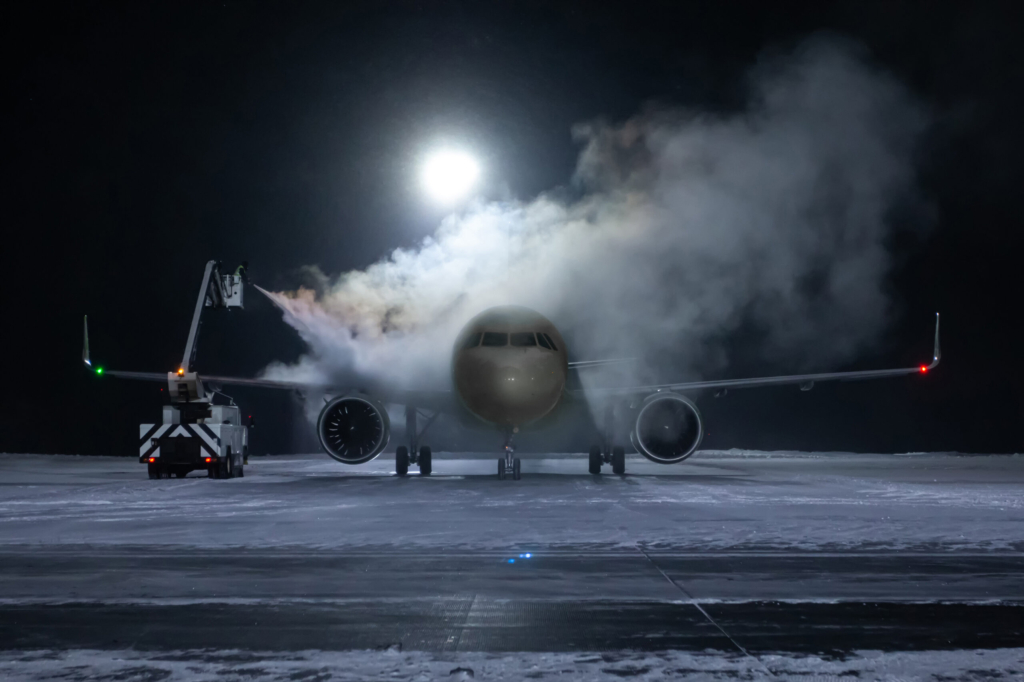
Airports spray millions of litres of glycol. We watch where it goes.
Battery-powered sensors at your outfalls, streaming glycol readings to one dashboard — all winter, unattended.
Built with environmental teams at Toronto Pearson · YVR · YWG
Battery-powered sensors at your outfalls, streaming glycol readings to one dashboard — all winter, unattended.
Built with environmental teams at Toronto Pearson · YVR · YWG
Lab results take 1–3 days. By then the water is gone. A live reading turns a report into a response.
Grab sampling reaches a fraction of your network. Distributed sensors watch every basin at once.
A season-long, timestamped record behind your annual glycol reporting — not a handful of grabs.
The Problem
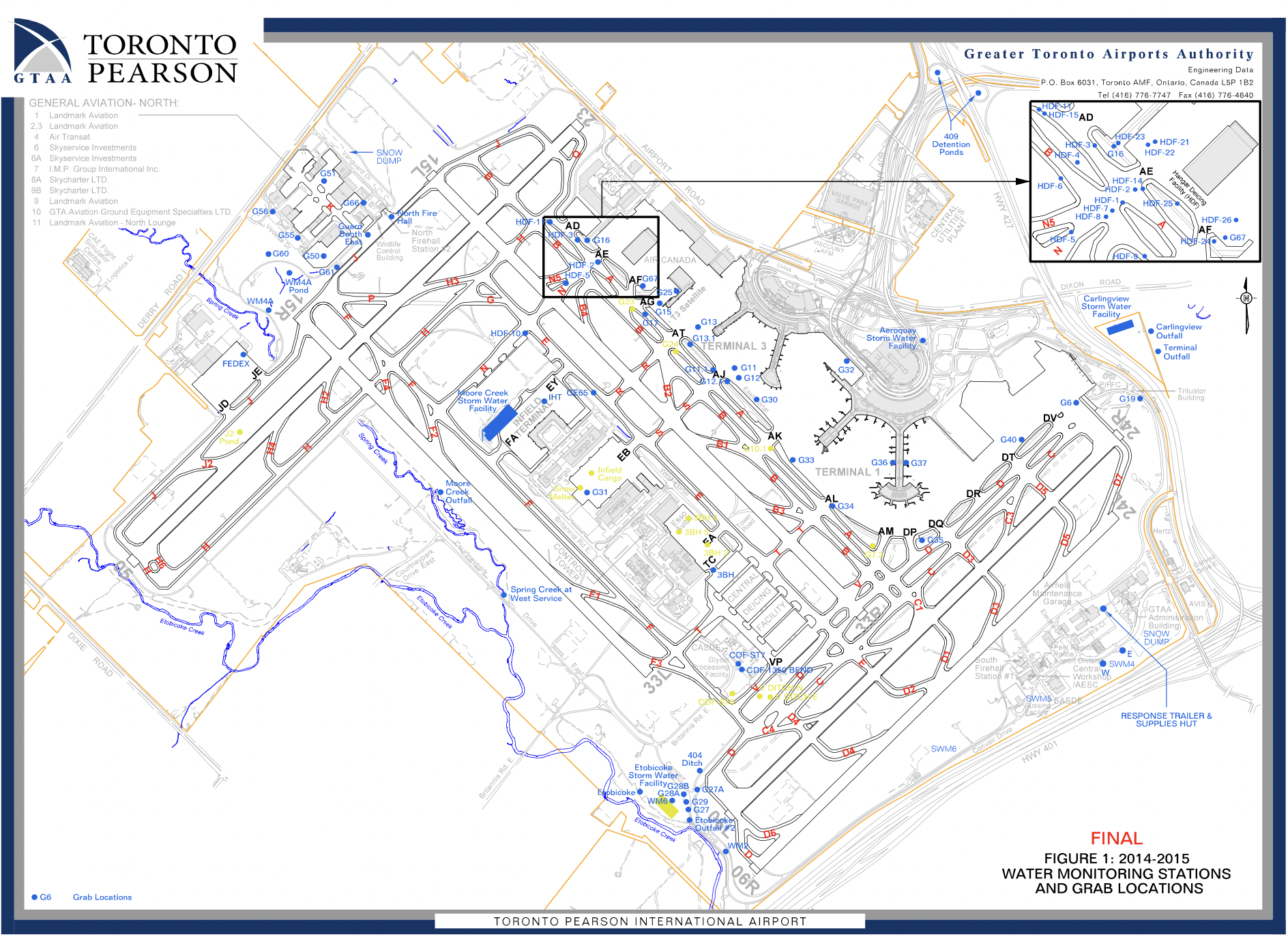
This is Toronto Pearson's water monitoring map — every station sampled by walking over with a bottle, then waiting days for the lab. A ~$500K-a-year program that still can't see a spike the night it happens.

The Sensor
Electrochemical glycol sensing, automated fluidics, and a cellular uplink in one weatherproof, battery-powered enclosure — installed before the season, running unattended through April.
The Dashboard
Live readings across your stormwater network, with instant alerts the moment a station crosses 100 ppm.
Built to supplement accredited lab testing — continuous visibility between compliance samples, not a replacement for them.
Deployment
A small pilot at your highest-priority outfalls, installed before the de-icing season.
Run against your grab-sample program until the data earns your trust.
Cover the whole network — basin by basin, at a fraction of analyzer cost.